Oxfordian Life
How Do I Protect My Child From Stress?
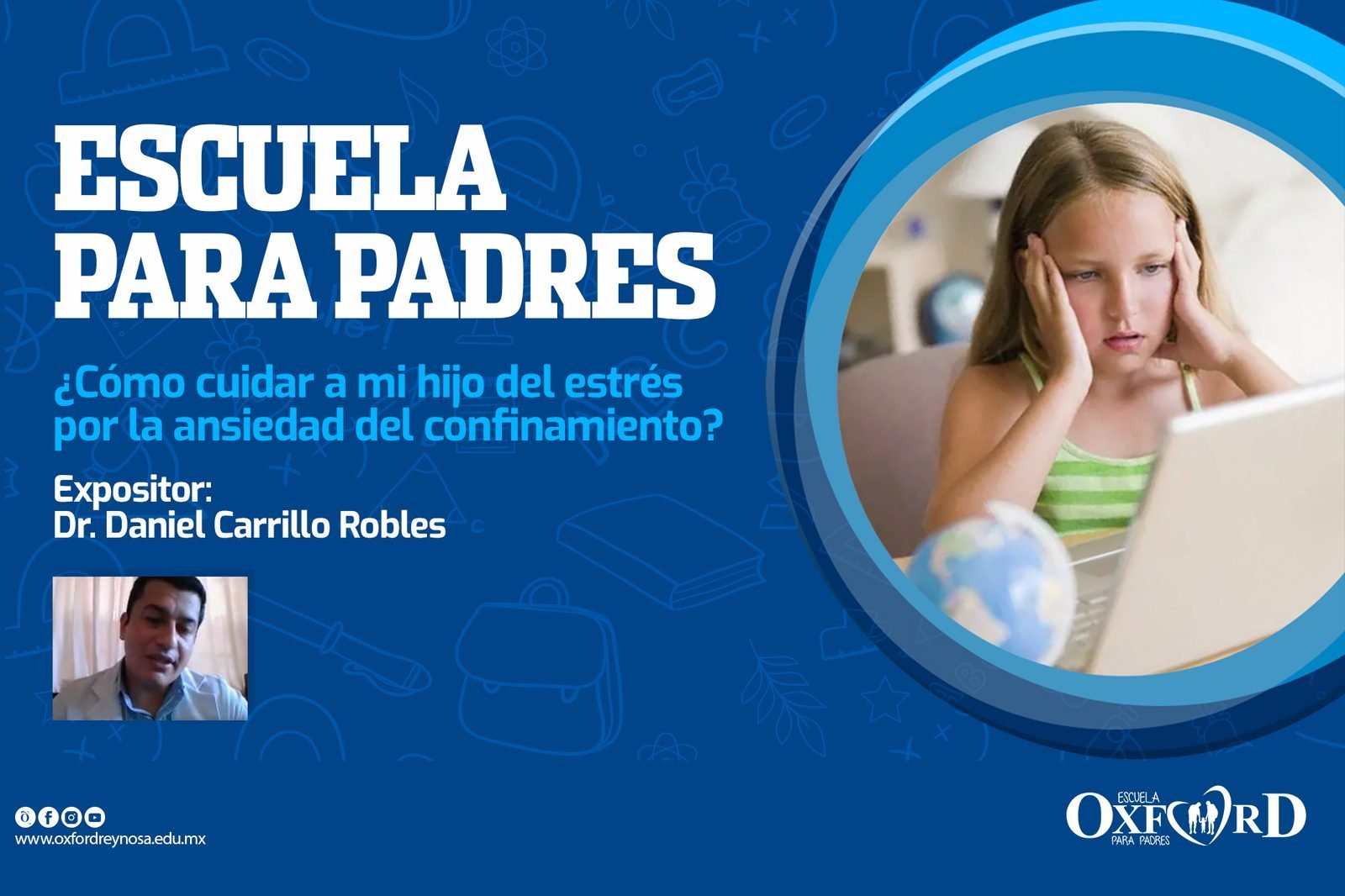
Contrary to what might be assumed, stress also appears in children, particularly in uncertain situations such as the one we have lived through during the health-emergency lockdown. It is therefore important to spot the signs in our children and to know what we can do about them.
Dr Daniel Carrillo Robles gave the talk “How do I protect my child from the stress of lockdown anxiety?” during the September online session of Escuela para Padres, in which he offered coping strategies useful for adults and children alike.
During the online meeting, the specialist in child and adolescent psychiatry explained that stress is a normal response to the stimuli we meet in life and helps us react in risky situations. The lockdown, however, has made that stress persist, breaking the body’s homeostasis and unbalancing our mental health.
He noted that the proportion of children affected by stress during lockdown rose from 13.4 to 40 per cent as a result of the anxiety the pandemic generated.
He explained that anxiety is a fear of something not physically present but present in the mind, though there is no cause for alarm when the fears are normal for the child’s age. On this he showed a table setting out what to expect at each stage. Loud noises, for example, normally startle a one-year-old, while between two and four children may be frightened by animals, the dark, fantastical beings, monsters and natural phenomena. Not until five do they begin to worry about illness and death, and later about burglars and villains, while at seven come social fears — of ridicule, and of lacking social skills.
He stressed that anxiety is more likely to develop in children with hyperactivity, autism, neurological development difficulties and even asthma.
He also highlighted that higher rates of depression have been recorded during the pandemic, reaching 43.7 per cent of cases in children presenting symptoms such as feeling misunderstood, isolation, hopelessness, changes in weight and loss of appetite, among others.
He set out that there are different kinds of coping with anxiety: productive, non-productive, and coping that involves others. The productive kinds are chiefly solving the problem, focusing on the positive, or finding some physical distraction; the non-productive include worrying, wishful thinking, and ignoring or not confronting the problem; coping that involves others refers to strategies such as seeking social support, spiritual support or professional help.
As a premise for effective treatment in any of the situations above, he said it is important that parents’ own emotional health be in balance if they are to help their children.
He mentioned that Mexico allocates only 1 per cent of its health budget to mental health, so it is important to know what mental health services are available — such as those offered through social security or public institutions — and he recalled the advantage the school offers in having a psychology department for the benefit of our Oxfordian families.
Carrillo Robles holds a doctorate in Psychiatry and mental health, specialising in child and adolescent psychiatry, and practises at the Centro de Diagnóstico y Desarrollo de Habilidades Neuropsicopedagógicas.
Escuela para Padres is an Oxford programme offering monthly sessions on subjects that provide tools to support children’s all-round development. It is open to the public and completely free.