Oxfordian Life
Love and Respect, the Pillars of Raising My Child
Angélica Buchán Durán and Arianna Cedillo presented “Love and respect, the pillars of raising my child” at the Escuela para Padres session, by Google Meet video conference. The subject is of considerable current importance, since isolation has increased the time spent with our children, raising questions about the best way to discipline them.
In the online session for March, the specialists in Positive Discipline recalled that some of the disciplinary practices our own parents used hurt the emotions, and that we often carry on using those same methods — so we must decide which lessons to keep and which to discard.
Positive Discipline remains an effective alternative when it is applied correctly, since it is a parenting style grounded in firmness with dignity and mutual respect, not in permissiveness or excessive severity.
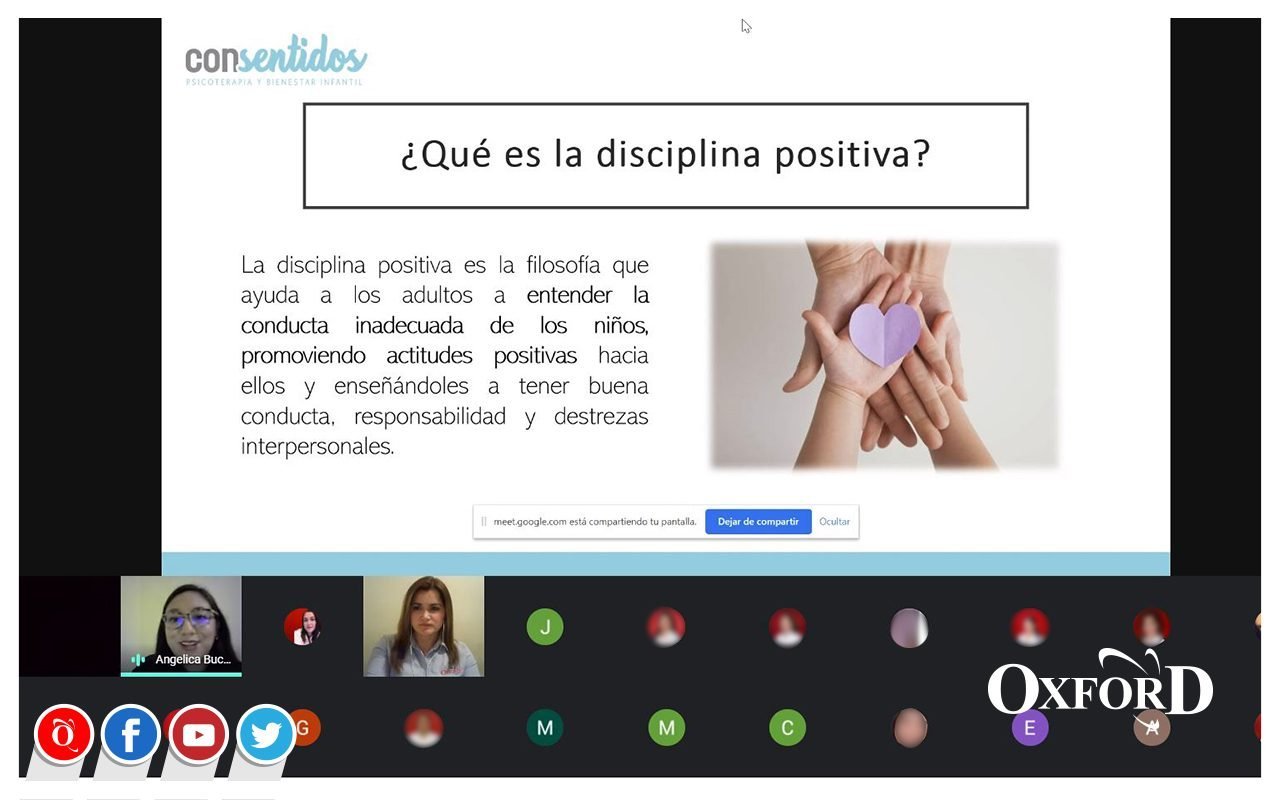
Through Positive Discipline, we as adults understand children’s inappropriate behaviour by teaching them good conduct, responsibility and the basic competencies for life.
Among the principles of Positive Discipline they noted that it is kind and firm, that it makes children feel important by creating connection before correction, that it is effective over the long term, and that it helps children develop their capabilities and become aware of them, among others.
They recommended creating routines and agreements, for which visual aids can be used.
They made clear that it is important to listen to our children in order to understand them and to let them know they are valued — though this does not mean we must do everything they say. They recommended giving the child the chance to decide in situations that carry no risk or harm: that is, “anything within the limits that shows respect for everyone” — respect towards the child, towards the parent and towards authority.
Faced with problems, they offered a series of steps for resolving them effectively. First, describe the conflict in a single descriptive sentence that does not revive old conflicts. Then think together about different solutions and weigh them against the three Rs and a U — respectful, reasonable, related and useful. Finally, choose one option and make sure it is put into practice.
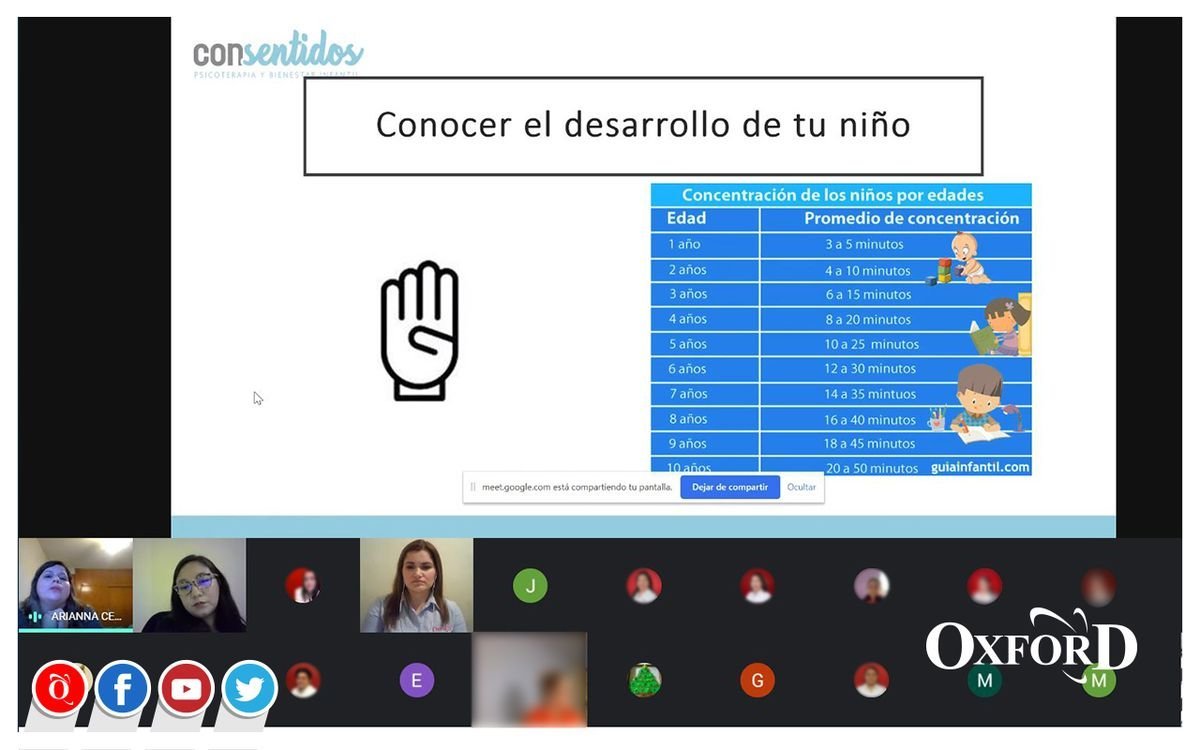
They also highlighted the need to understand the child’s development so that our actions are appropriate to their age, and shared a table on a child’s attention span at each stage.
Some important points to note are validating the child’s emotions by talking about how they feel and helping them recognise those feelings, responding with phrases such as: “It is normal to feel upset…”. They also recommended encouraging the child by describing their effort, so that motivation grows. Creating a sense of belonging is essential, by fostering teamwork and community.
They closed with a line from Albert Einstein that helps sustain motivation at times like these: “In the middle of difficulty lies opportunity.”
Escuela para Padres is a programme that brings our community free talks, conferences and workshops providing tools for better results in children’s all-round development.