Oxfordian Life
The Impact of Technology and Social Media on Mental Health
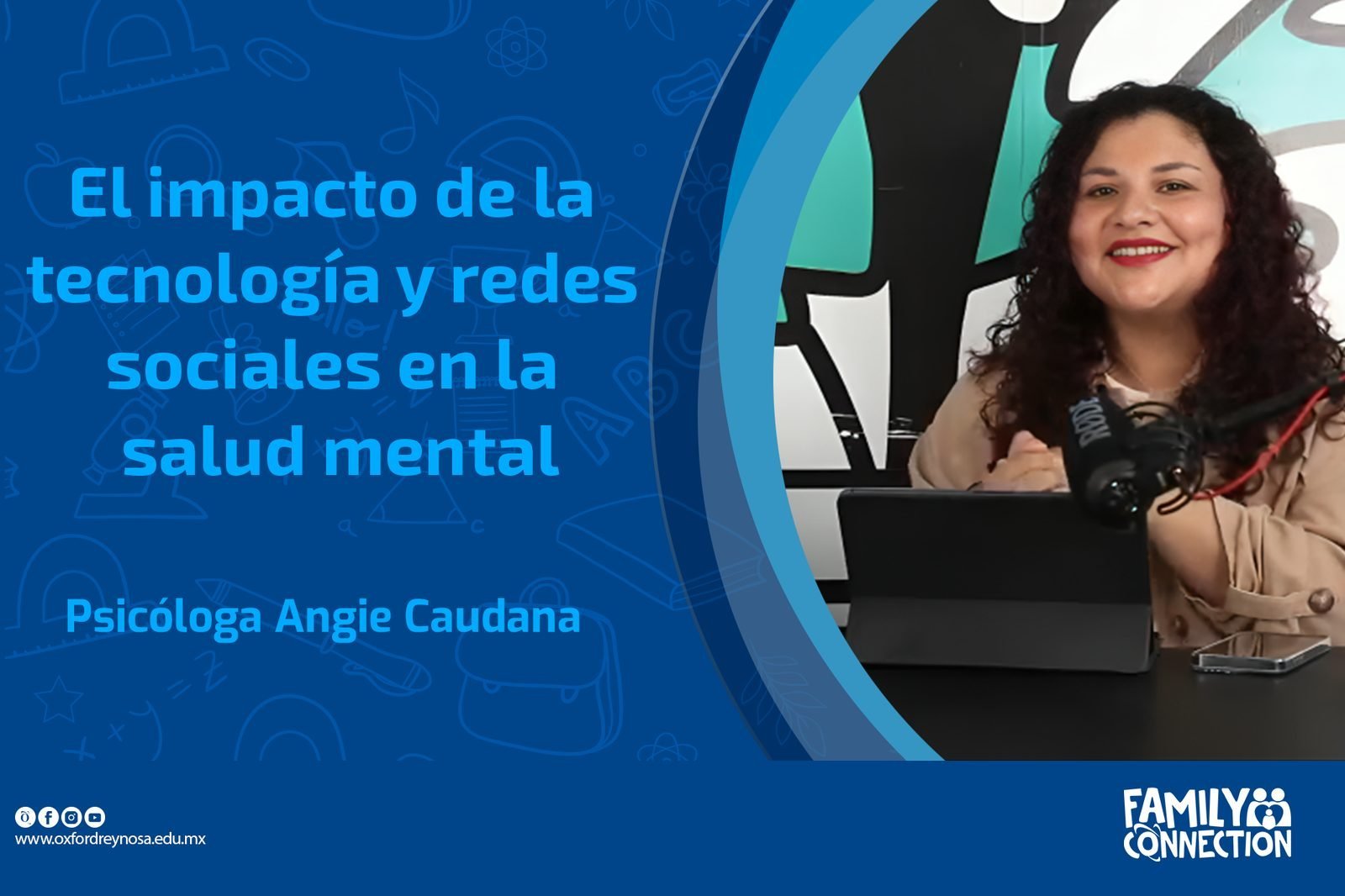
Technology and social media have transformed the way children and adolescents relate to the world — but how does this affect their mental health? In our recent edition of the Family Connection podcast we approached this subject from the perspective of Mr. Acevedo, psychologist at Petrolera Campus, together with our special guest, the psychologist Angie Caudana of the Psikids clinic, specialists in parental guidance focused on Positive Discipline.
Both addressed a subject that spans the ages from preschool through to high school, and offered a range of viewpoints, providing data, strategies and advice for a conscious use of technology.
The most-used devices are mobile phones, followed by tablets and laptops. Although technology offers opportunities for learning and connection, it also presents significant challenges, especially at sensitive ages such as preschool and primary.
The psychologist explained that technology is not bad and can make the work of learning easier, given the many applications that exist for learning, but that excessive use of it can trigger problems such as anxiety, irritability and addiction.
At early ages, excessive exposure affects the development of language, sleep routines and creativity because of the content children consume — videos of very short duration, or sequences of colours that overstimulate the youngest. In older children and adolescents the impact shows up as low self-esteem, comparison with influencers and, in some cases, cyberbullying.
Angie Caudana stressed the importance of parental accompaniment in the use of electronic devices, because it is not a matter of banning technology but of educating children about its correct use. Some of her recommendations included:
- Limit screen time according to age: for small children it is suggested that devices be avoided before the age of 2, and their use regulated in the years that follow.
- Encourage educational use: rather than entertainment alone, direct the use of devices towards creative and learning activities.
- Set clear rules: no devices during meals or before bed, and supervise online activity.
- Promote family interaction: sharing time with your children watching films, playing video games or doing activities together can make the difference.
- Restrict content that is not suitable for minors: identify what kind of content and which video games they consume, to avoid confusion between reality and fiction, or interactions with strangers.
At The Oxfordian School the use of devices is restricted in favour of exploration and sensory learning. Even so, the positive potential of technology is recognised when it is used appropriately: it makes access to information easier, allows social connection at a distance (whether with a relative or a friend) and fosters creativity when it is well directed.
Technology is a powerful tool and part of our daily lives. Its impact, positive or negative, depends on the accompaniment and the limits established by parents.
The psychologist Angie Caudana closed by inviting parents to take part in her parental guidance sessions, which address subjects such as Positive Discipline, establishing routines and a conscious use of devices — because with proper supervision technology can be an ally rather than an obstacle in the emotional and cognitive development of the new generations.