Oxfordian Life
An Environment for Everyone: Neurodiversity in the Classroom
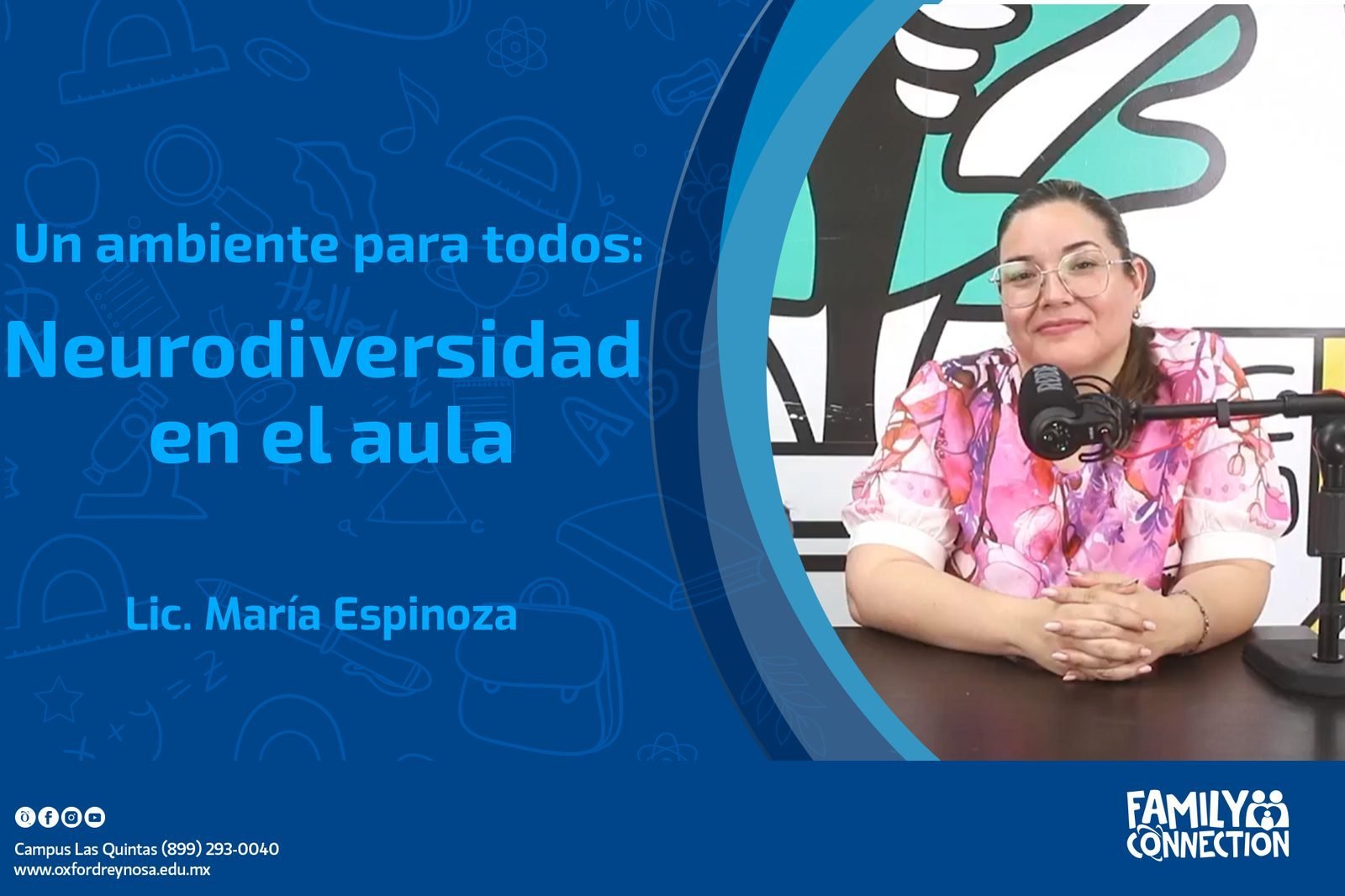
In our Family Connection broadcast on Wednesday 5 March 2025, Ms. Cervantes, psychologist at Las Fuentes Campus, was joined by a special guest, Lic. María Espinoza, director of the SIPA centre, to discuss the theme “An environment for everyone: neurodiversity in the classroom”.
During the session our guest, who is also certified in Positive Discipline in early childhood, answered questions such as: What is neurodiversity? How does neurodiversity present itself in the classroom? What are some of the myths about neurodiversity? How can students with this condition be supported? She also left a positive message about how we should understand neurodivergent people.
What is neurodiversity?
Neurodiversity refers to the different ways in which we process information, perceive the world and react to stimuli, the expert explained. Every individual is unique, even among siblings or twins, and there is no “correct” way to learn or to interact with one’s surroundings, she affirmed.
In education, she noted, it is essential to recognise that every student perceives, explores and processes the world differently. There are students, for example, who do not appear to be paying visual attention yet are able to answer correctly when asked. Others appear to be paying attention but may be mentally elsewhere and unable to recall what was said in class.
Neurodivergence in the classroom
Although we all process information in our own way, Espinoza explained that most people fall within an average range, represented by the bell curve. Students at the extremes of that curve may present characteristics associated with neurodivergence. Some examples are:
- Attention Deficit Hyperactivity Disorder (ADHD).
- Autism Spectrum Disorder (ASD).
- Learning disorders.
- Language difficulties.
Neurodivergent students may face specific challenges, such as sensitivity to noise, light or particular stimuli. With simple adjustments, however — the use of adaptive tools such as noise-reducing headphones, for instance — it is possible to help them take part and reach their academic goals.
An example of classroom adjustments
Lic. Espinoza illustrated the use of these tools with a day when her son did not want to carry on writing because he was getting tired. She chose to buy two pencils, one gold and one red (his favourite colour), and explained to him that these “magic” pencils would not let him get tired of writing. From the very first day he used them, his teachers told her the boy had worked extremely well with his new “magic” pencils.
Adjustments of this kind, however small, help students adapt while they work towards their goals, she explained, adding that it is important to remember there is no single guide for supporting every child. It is a matter of observing and finding the strategies that work best for them.
She added that the classmates of these neurodivergent children help a great deal in resolving their situations, through the empathy they feel for them; they help them to socialise and to build confidence, since by nature children do not draw distinctions between people and find it easier to adapt to each individual, whatever their condition.
How can teachers help classmates be empathetic?
She advised that teachers should involve students in helping others and avoid creating preferences. If at some point the other students come to feel displaced by a perceived preference, it is time to level the situation. Returning to the pencil example: if another student asks for “magic” pencils, or questions why they were not given any, it is the moment for the teacher to say something like: “All right — the moment you need them, we will give you ‘magic’ pencils too”, or “if you start to feel tired we will try to get you some ‘magic’ pencils as well”.
The aim is to help the students who ask why others get something and they do not to see that they will be given the same attention if they should need it at any point.
Breaking myths about neurodivergence
- “They are completely different from neurotypical people”: False. We all process information in our own unique way, neurotypical people included.
- “Students with ADHD do not pay attention”: False. They can often hyperfocus on particular activities, but they need support to manage their attention.
- “They cannot be in mainstream schools”: False. With the right adjustments these students can take part successfully (the “magic” pencils being one example).
How to support neurodivergent students
- Observe which situations act as triggers, and look for creative solutions.
- Motivate students with personalised strategies.
- Teach classmates to be empathetic and respectful of difference.
- Avoid becoming frustrated or applying too much pressure through marks and activities, focusing instead on positive strategies.
To close, Lic. Espinoza offered an encouraging message on how to foster empathy towards people with this condition.
Neurodiversity is not an illness, nor something that needs to be “fixed”. It is simply a different way of processing the world. Neurodivergent people can lead full and successful lives, with academic, professional and personal achievements.
By understanding and respecting neurodiversity, we help create an inclusive and empathetic environment in which all students can live together and develop without discrimination.
Family Connection is a completely free programme offered by The Oxfordian School to the whole community. The subjects covered are presented by highly qualified experts in their field, who give families tools for raising their children.
If you would like to contact Lic. Espinoza for more information about neurodivergence or other psychological subjects, here are her social media and contact number:
- Instagram: @Sipa_mx
- Facebook: SIPA.mx
- Telephone: 899 459 9891